Natural cat food: best brands and how to choose (2026)
What actually makes a food good for a cat —taurine included— and a comparison of the best natural food brands on the Spanish market.
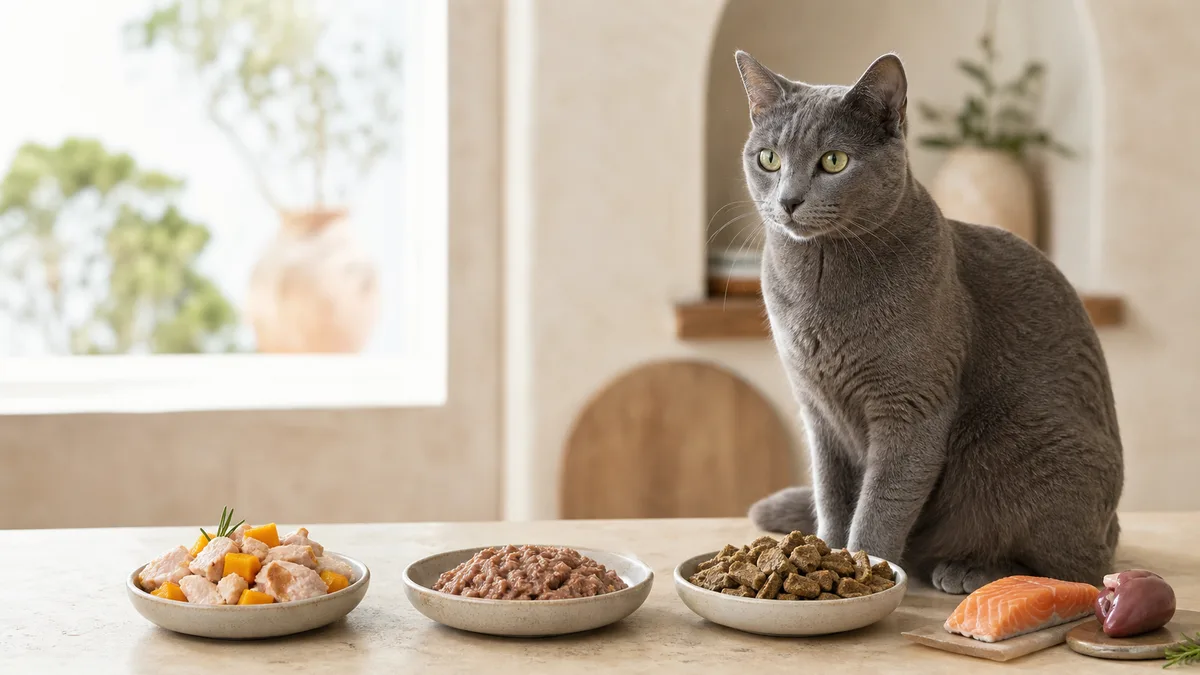
In this article
The best natural food for a cat is the one that respects what it is: a strict carnivore. That means a diet rich in quality animal protein (meat or fish as the first ingredient), with enough moisture and no grains or added sugars, and with the taurine that its heart and eyesight need. Get that right, and you have three valid formats —natural wet food, food cooked at a low temperature and BARF— plus several brands that make them ready-balanced. Here we explain how to choose without the marketing spin and compare the strongest options on the Spanish market.
What makes a cat’s food “natural” (and why taurine changes everything)
“Natural” isn’t a regulated label: every brand uses it in its own way. In practice it refers to food made with recognisable, minimally processed ingredients —meat, fish, offal— as opposed to ultra-processed products packed with grain. But with cats there’s a nuance you can’t ignore, one that’s less critical in dogs:
The cat is a strict carnivore. It’s not a small dog: it needs nutrients it can only get from animal tissue. The most famous is taurine, an amino acid essential for the feline heart and vision. A cat that is deficient in taurine can develop heart problems (cardiomyopathy) or even blindness. That’s why, with a cat, “being natural” isn’t enough: it has to be natural and complete, meaning formulated to cover taurine and the rest of the essentials. This is the underlying reason why improvised homemade food is riskier in cats than in dogs.
The formats: wet, cooked, BARF (and homemade)
- Natural wet food (cans, pouches, tubs): its big advantage is water. Cats instinctively drink little, and a continuous dry diet encourages urinary problems. Wet food with a high percentage of meat is one of the best bases for a cat; you’ll find the details in our guide to the best wet cat food.
- Food cooked at a low temperature: fresh ingredients gently cooked, which keep their palatability and digestibility with less microbiological risk than raw. Convenient if you buy ready-formulated meals.
- BARF diet (raw): raw meat, offal and some meaty bone. It gets close to the diet of a wild cat, but it demands rigorous formulation and strict hygiene; it isn’t the best option in households with immunocompromised people.
- Homemade: possible, but only with a recipe from a veterinary nutritionist. Cooking “by eye” on an ongoing basis is the fast track to taurine deficiency.
How to choose: 5 things to check on the label
- Meat or fish should come first. The first ingredient should be a specific animal source (“chicken”, “salmon”), not “by-products” or grains.
- It should be complete (with taurine). If it’s going to be the main diet, it has to be declared “complete” and cover taurine. If it’s “complementary”, combine it.
- Moisture. Prioritise wet or cooked food, or combine kibble with them. It’s the best cheap way to prevent urinary issues.
- No sugars or excess grain. A cat doesn’t need them and they add empty calories.
- One you can keep up. The best diet is the one you sustain every month without giving up on it; factor in the real cost and the logistics (freezing, fridge).
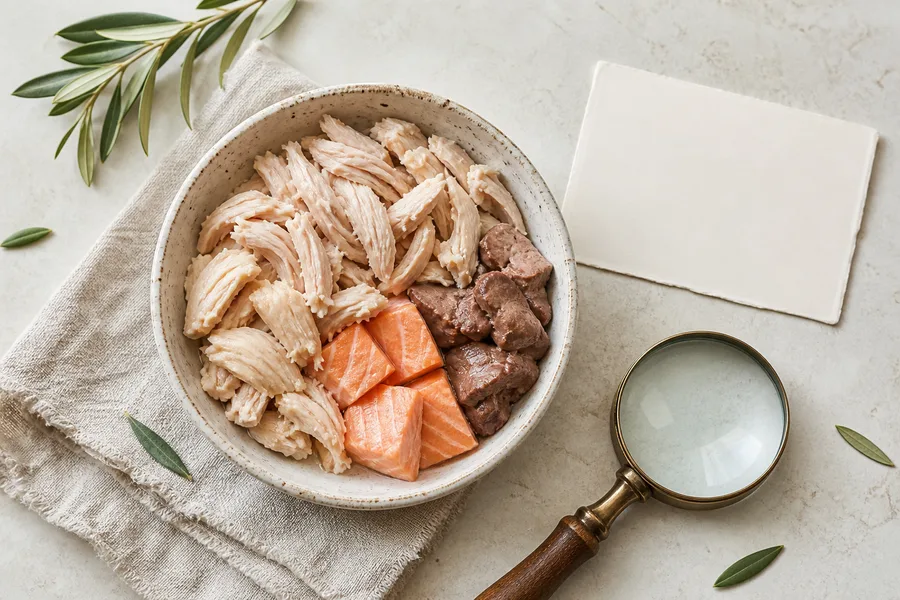
Best natural food brands for cats
The feline market has fewer “natural” options than the canine one, but there are solid choices. This is an honest selection by type; none is “the best” for every cat — it depends on your case.
| Brand | Type | Species | Where it stands out |
|---|---|---|---|
| Applaws / Almo Nature | Natural wet food (cans) | Cat | High declared % of meat, easy to find as a complement |
| COCOSI | Wet (mousses, stews, soups) | Dog and cat | Available at vet clinics, Carrefour and online; formulas with added taurine |
| Food for Joe | Customisable cooked food | Dog and cat | Tailor-made meals and ingredient selection |
| Guau&Cat | Cooked + BARF + snacks | Dog and cat | Value for money, one-off purchase (no subscription), formulated by its veterinary team |
| Puromenu | BARF + cooked + organic pouches | Dog and cat | Wide feline range, organic option, budget-friendly pouch format |
| Wild Balance | Cooked (cans and tubs) | Dog and cat | Widely available (Kiwoko, Amazon), single-protein recipes, good palatability |
All of them meet the criteria above — the right one for you depends on whether you’re after wet food only, a made-to-measure format, or a brand that also covers the dog in the house. The data is verifiable on your own.
Special cases: neutered cats and urinary prevention
If your cat is neutered, its energy expenditure drops and the risk of being overweight rises. It doesn’t need a “miracle kibble”, but food that is rich in protein, moist and with the portion adjusted to its new situation. Natural wet or cooked food fits well because it fills them up on fewer empty calories and provides water, which is exactly what prevents the urinary problems that are so common in neutered cats. You’ll find the portion calculations and how to monitor their weight in our guide on feeding a neutered cat.
With any medical condition (kidney, urinary, significant excess weight), have your vet supervise the change.
How to get started without any surprises
Switch gradually, over 7-10 days, mixing in more and more of the new food with the usual one. Cats are especially neophobic (wary of anything new), so patience is key: offer, don’t force, and respect their pace. If you want the step-by-step, our guide on switching from kibble to natural food will help. And if you also have a dog, see how to choose their natural food.
Frequently asked questions
What’s the best natural food for a cat?
The one with quality meat or fish as the first ingredient, that provides moisture, contains no grains or added sugars and is formulated as complete (with taurine). On that basis, natural wet food and cooked food tend to be the most balanced and the easiest to keep up.
Which is healthier for a cat, kibble or wet food?
Wet food has one clear advantage: it provides water. Cats drink little, and a continuous dry diet encourages urinary problems. A good natural kibble is valid, but combining it with wet food —or basing the diet on wet/cooked food— helps with hydration.
What does Spain’s consumer organisation (OCU) say about the best cat food?
OCU’s analyses focus mainly on commercial kibble by value for money, and there a supermarket brand usually stands out. It’s useful as a kibble reference, but it doesn’t evaluate cooked or BARF natural food, which is a different category with different criteria.
Can I feed my cat homemade food?
Yes, but with more care than with dogs. Cats need taurine, and a deficiency causes heart and vision problems. A poorly formulated homemade recipe quickly falls short, so only do it following a plan from a veterinary nutritionist, or turn to brands that already balance it.
Is natural food suitable for a neutered cat?
Yes, and it usually does them good: neutering lowers their energy expenditure and raises the risk of being overweight. Food that is rich in protein and moisture, with the portion adjusted, helps maintain weight and urinary health.
Keep reading
Rovinfood alternatives: price, cat coverage, reviews (2026)
Rovinfood costs up to €13/kg on one-off orders and has an 8-pack minimum. We compare the alternatives on price, format and commitment.
 Comparisons & guides
 Puromenú alternatives: price, cat range and reputation compared (2026)
Puromenú publishes its prices like no other brand in the sector, but its Trustpilot score weighs on the decision. We compare who solves each reason to switch.
 Comparisons & guides
 How much natural cat food really costs per month (verified prices, 2026)
The same honest math we did for dogs, now for cats: real monthly cost by weight and brand, with prices verified the same day across the four brands that cover cats.